

3D Printing
Accelerate your product development cycle with precision additive manufacturing. From functional prototypes to end-use parts, Bridge360 Engineering delivers complex geometries with quick turnarounds and strict quality standards.
At Bridge360 Engineering, we help engineers move from CAD models to high-performance parts in days. Whether you need rapid prototypes for testing or low-volume end-use production runs, our additive manufacturing infrastructure delivers consistent accuracy, structural integrity, and superior surface finishes to accelerate your time-to-market.

3D Printing
Accelerate your product development cycle with precision additive manufacturing. From functional prototypes to end-use parts, Bridge360 Engineering delivers complex geometries with quick turnarounds and strict quality standards.
At Bridge360 Engineering, we help engineers move from CAD models to high-performance parts in days. Whether you need rapid prototypes for testing or low-volume end-use production runs, our additive manufacturing infrastructure delivers consistent accuracy, structural integrity, and superior surface finishes to accelerate your time-to-market.

3D Printing
Accelerate your product development cycle with precision additive manufacturing. From functional prototypes to end-use parts, Bridge360 Engineering delivers complex geometries with quick turnarounds and strict quality standards.
At Bridge360 Engineering, we help engineers move from CAD models to high-performance parts in days. Whether you need rapid prototypes for testing or low-volume end-use production runs, our additive manufacturing infrastructure delivers consistent accuracy, structural integrity, and superior surface finishes to accelerate your time-to-market.
What is 3D Printing?
3D printing, also known as additive manufacturing, is a process that builds parts layer by layer directly from a digital design. Instead of cutting away material like traditional machining, or forming it in a mold like casting or injection molding, additive manufacturing adds material precisely where it's needed.
Whether you need a single prototype to test fit and form, or a short production run of end use parts, 3D printing gives you speed, flexibility, and precision at every stage of development.
Key Advantages:
No tooling required: Go from design to part in days, not weeks.
Design freedom: Create geometries impossible with traditional methods.
Material versatility: Plastics, resins, and metals to match your application.
Rapid iteration: Test, refine, and improve designs quickly and affordably.

Our 3D Printing Technologies
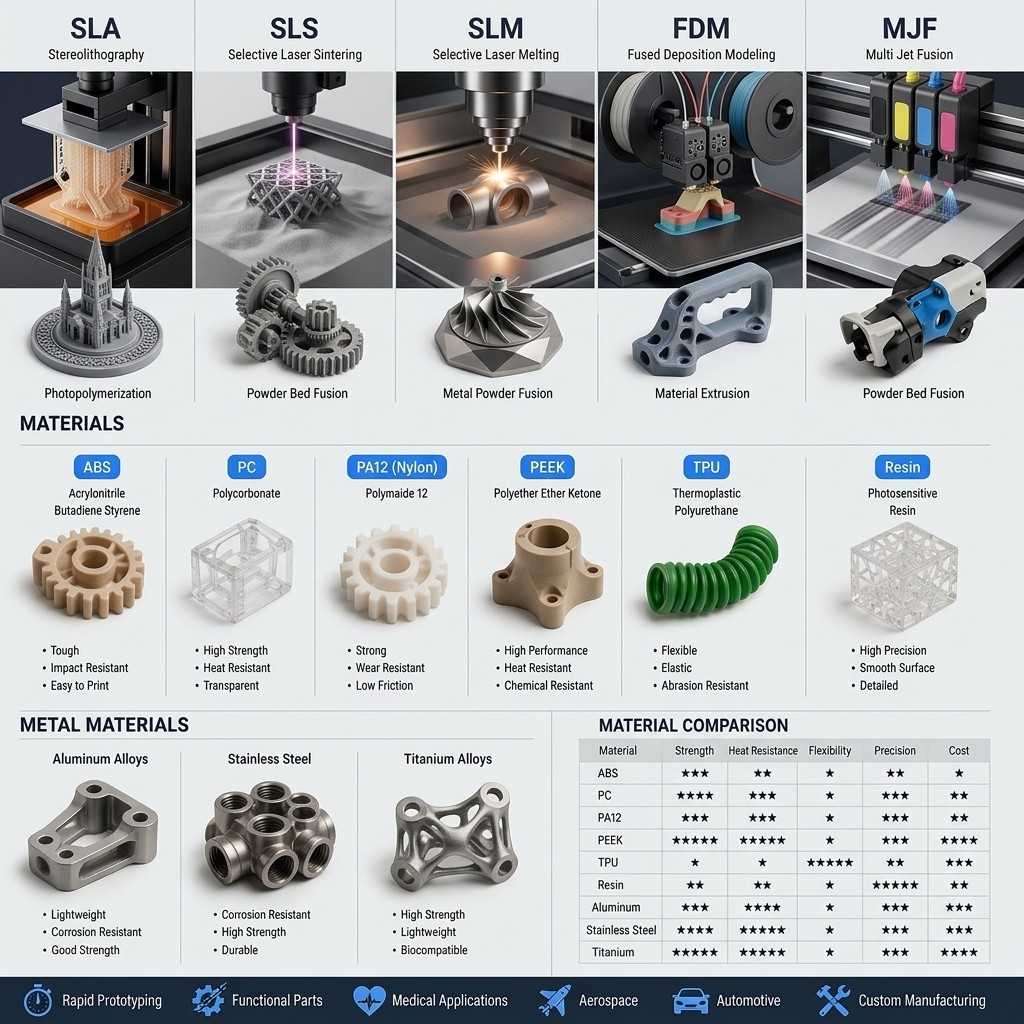
Our advanced 3D printing capabilities span multiple technologies, enabling us to deliver precision visual prototypes, rugged functional parts, and industrial-grade metal components—all under one roof.
Our advanced 3D printing capabilities span multiple technologies, enabling us to deliver precision visual prototypes, rugged functional parts, and industrial-grade metal components—all under one roof.
SLA
3D Printing

SLA (Stereolithography)
Stereolithography (SLA) utilizes a focused UV laser beam to selectively solidify photosensitive liquid resin into high-resolution solid parts. This layer-by-layer photopolymerization process yields components renowned for their superior surface quality and exacting dimensional accuracy.
Stereolithography (SLA) utilizes a focused UV laser beam to selectively solidify photosensitive liquid resin into high-resolution solid parts. This layer-by-layer photopolymerization process yields components renowned for their superior surface quality and exacting dimensional accuracy.
Key Advantages:
Ultra-smooth surface finish
Exceptional fine details
Versatile resin selection
Key Advantages:
Ultra-smooth surface finish
Exceptional fine details
Versatile resin selection
Technical Specifications:
Materials: Standard, Tough, Flexible, Heat-Resistant, Castable Resins.
Tolerances: Down to ±0.2 mm.
Technical Specifications:
Materials: Standard, Tough, Flexible, Heat-Resistant
Tolerances: ±0.2 mm.
Applications:
Visual prototypes, jewelry masters, dental/medical models, consumer goods.
Applications:
Visual prototypes, jewelry masters, dental/medical models, consumer goods.
Process Notes and Finishing:
Lightweight, superior strength-to-weight ratio, excellent corrosion resistance; ideal for aerospace, automotive, and electronic enclosures.
Process Notes and Finishing:
Lightweight, superior strength-to-weight ratio, excellent corrosion resistance; ideal for aerospace, automotive, and electronic enclosures.
SLS
3D Printing

SLS (Selective Laser Sintering)
Selective Laser Sintering employs a powerful CO₂ laser to thermally bond fine thermoplastic powders. The unsintered powder bed inherently supports overhangs and undercuts, enabling the production of highly complex, interlocking assemblies without dedicated fixtures.
Selective Laser Sintering employs a powerful CO₂ laser to thermally bond fine thermoplastic powders. The unsintered powder bed inherently supports overhangs and undercuts, enabling the production of highly complex, interlocking assemblies without dedicated fixtures.
Key Advantages:
No support structures needed
Strong, durable parts
Complex geometry capability
Key Advantages:
No support structures needed
Strong, durable parts
Complex geometry capability
Technical Specifications:
Materials: PA12 (Nylon), Glass-Filled Nylon, TPU, PP, PEEK
Tolerances: ±0.2 mm (typical)
Technical Specifications:
Materials: PA12 (Nylon), PP, Glass-Filled Nylon, TPU, PEEK
Tolerances: ±0.2 mm (typical)
Applications:
Functional prototypes, end-use production parts, manufacturing aids, automotive/aircraft components.
Applications:
Functional prototypes, end-use production parts, manufacturing aids, automotive/aircraft components.
Process Notes and Finishing:
Parts emerge slightly porous and with a grainy texture. Post-processing options include vapor smoothing, bead blasting, or coating for enhanced aesthetics and moisture resistance.
Process Notes and Finishing:
Parts emerge slightly porous and with a grainy texture. Post-processing options include vapor smoothing, bead blasting, or coating for enhanced aesthetics and moisture resistance.
SLM
3D Printing
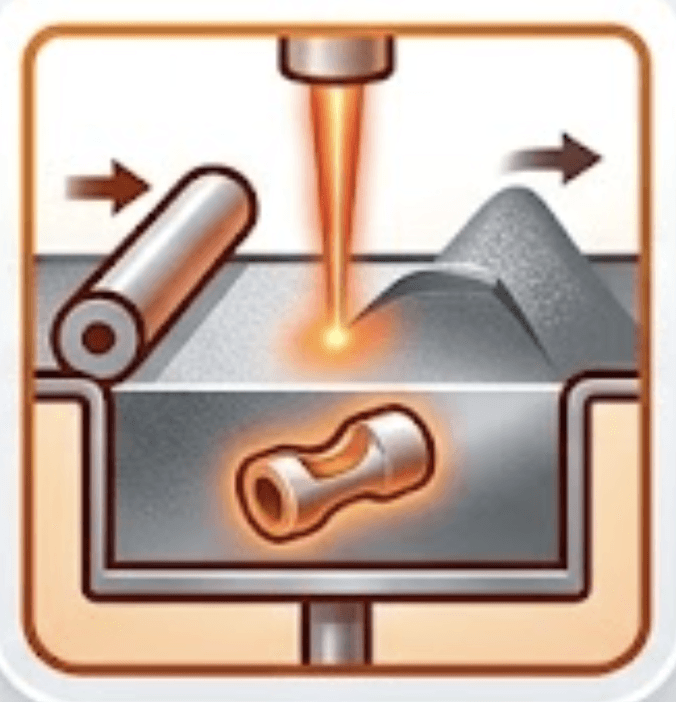
SLM (Selective Laser Melting)
Selective Laser Melting is a powder-bed fusion technique that uses a high-energy fiber laser to completely liquify metallic powders, creating fully dense, metallurgically sound components. This process is unmatched for producing bionic structures and complex internal cooling networks.
Selective Laser Melting is a powder-bed fusion technique that uses a high-energy fiber laser to completely liquify metallic powders, creating fully dense, metallurgically sound components. This process is unmatched for producing bionic structures and complex internal cooling networks.
Key Advantages:
Fully dense metal parts
Excellent mechanical strength
Complex internal channels
Key Advantages:
Fully dense metal parts
Excellent mechanical strength
Complex internal channels
Technical Specifications:
Materials: Aluminum, Stainless Steel, Titanium, Inconel, Copper Alloys
Tolerances: ±0.2 mm (typical)
Technical Specifications:
Materials: Aluminum, SS, Titanium, Copper Alloys
Tolerances: ±0.2 mm (typical)
Applications:
Aerospace structural parts, patient-specific implants, lightweight brackets, high-performance tooling.
Applications:
Aerospace structural parts, patient-specific implants, lightweight brackets, high-performance tooling.
Applications:
Aerospace structural parts, patient-specific implants, lightweight brackets, high-performance tooling.
Process Notes and Finishing:
Parts are built on solid metal plates requiring wire EDM or band-saw removal. Heat treatment and CNC post-machining are often applied to critical mating surfaces to achieve tight bearing tolerances.
Process Notes and Finishing:
Parts are built on solid metal plates requiring wire EDM or band-saw removal. Heat treatment and CNC post-machining are often applied to critical mating surfaces to achieve tight bearing tolerances.
FDM
3D Printing

FDM (Fused Deposition Modeling)
Fused Deposition Modeling works by feeding a continuous spool of thermoplastic filament through a heated nozzle, depositing molten material in precise paths to construct parts layer by layer. It offers a balance of cost-efficiency, material versatility, and scalability.
Fused Deposition Modeling works by feeding a continuous spool of thermoplastic filament through a heated nozzle, depositing molten material in precise paths to construct parts layer by layer. It offers a balance of cost-efficiency, material versatility, and scalability.
Key Advantages:
Cost-effective for large parts
Wide material selection
Good functional strength
Key Advantages:
Cost-effective for large parts
Wide material selection
Good functional strength
Technical Specifications:
Materials: ABS, PLA, PETG, PC, Nylon, PEEK, TPU
Tolerances: ±0.2 mm (material dependent)
Technical Specifications:
Materials: ABS, PLA, PETG, PC, Nylon, PEEK, TPU
Tolerances: ±0.2 mm (typical)
Applications:
Proof-of-concept models, shop-floor tooling, electronic enclosures, educational prototypes.
Applications:
Proof-of-concept models, shop-floor tooling, electronic enclosures, educational prototypes.
Applications:
Proof-of-concept models, shop-floor tooling, electronic enclosures, educational prototypes.
Process Notes and Finishing:
The process leaves distinct anisotropic layer ridges. For a professional finish, we recommend sanding, priming, or chemical vapor smoothing (for compatible materials) to achieve a uniform, sealed surface.
Process Notes and Finishing:
The process leaves distinct anisotropic layer ridges. For a professional finish, we recommend sanding, priming, or chemical vapor smoothing (for compatible materials) to achieve a uniform, sealed surface.
MJF
3D Printing

MJF (Multi Jet Fusion)
Multi Jet Fusion is an advanced powder-bed technology that selectively applies chemical fusing and detailing agents to a nylon powder bed, which are then simultaneously fused by sweeping infrared heating units. This creates high-throughput parts with isotropic, consistent properties.
Multi Jet Fusion is an advanced powder-bed technology that selectively applies chemical fusing and detailing agents to a nylon powder bed, which are then simultaneously fused by sweeping infrared heating units. This creates high-throughput parts with isotropic, consistent properties.
Key Advantages:
Consistent isotropic strength
Fast build speeds & Smooth surface quality
Support-free printing
Key Advantages:
Consistent isotropic strength
Fast build speeds & Smooth surface quality
Support-free printing
Technical Specifications:
Materials: PA12, PA11, Glass-Bead Filled Nylon, TPU.
Tolerances: ±0.15 mm (typical)
Technical Specifications:
Materials: PA12, PA11, Glass-Bead Filled Nylon, TPU.
Tolerances: ±0.15 mm typical
Applications:
Bridge production parts, functional assemblies, medical devices, industrial tooling.
Applications:
Bridge production parts, functional assemblies, medical devices, industrial tooling.
Process Notes and Finishing:
Parts are cooled and cleaned with compressed air and media blasting to remove loose powder. The natural matte surface can be enhanced with dyeing, painting, or chemical sealing for high-wear environments.
Process Notes and Finishing:
Parts are cooled and cleaned with compressed air and media blasting to remove powder. The natural matte surface can be enhanced with dyeing, painting, or chemical sealing for high-wear environments.
Materials for 3D Printing
Choosing the right material is critical to the success of your project. We provide an extensive and carefully curated materials portfolio spanning polymers, resins, and high-performance metals. Whether you need impact resistance, bio-compatibility, thermal stability, or aesthetic clarity, we have the right solution for your application.
Plastics
Our plastic offerings cover a broad spectrum of engineering thermoplastics and specialty resins, suitable for both prototyping and production-grade parts:
Engineering Filaments:
ABS, PC, Nylon (PA12 & PA11), PEEK, PP, and flexible TPU.
Specialty Resins (SLA):
Standard, tough, flexible, and high-heat-resistant photopolymers, plus castable grades for investment casting patterns.
Metals (SLM)
For demanding industrial and mission-critical applications, we offer a range of fully dense metal alloys:
Available Alloys: Aluminum, Stainless Steel, Titanium, Inconel, and Copper-based alloys.
Typical Applications: Aerospace structural parts, medical implants, heat exchangers, lightweight brackets, and high-wear tooling.
Plastics & Photopolymers
Our plastic offerings cover a broad spectrum of engineering thermoplastics and specialty resins, suitable for both prototyping and production-grade parts:
Engineering Filaments:
ABS, PC, Nylon (PA12 & PA11), PEEK, PP, and flexible TPU.
Specialty Resins (SLA):
Standard, tough, flexible, and high-heat-resistant photopolymers, plus castable grades for investment casting patterns.
High-Performance Metals (SLM)
For demanding industrial and mission-critical applications, we offer a range of fully dense metal alloys:
Aluminum, Stainless Steel, Titanium, Inconel, and Copper-based alloys.
Unsure about materials? We assess mechanical, thermal, and chemical needs—then pair you with the ideal solution, balancing performance and budget.
Unsure about materials? We assess mechanical, thermal, and chemical needs, then
pair you with the ideal solution, balancing performance and budget.
Design Considerations & Capabilities
Precision 3D printing begins with intentional design. While parameters vary across specific additive technologies, fundamental guidelines ensure high-yield, high-performance parts:
Minimum Wall Thickness & Feature Size: Target 0.5 mm to 1.2 mm depending on the technology and material selected.
SLA, SLM, and FDM require dedicated support structures for overhangs and bridging.
SLS and MJF utilize powder-bed fusion, eliminating the need for support structures and allowing for complex, nested geometries.
Part Orientation: Optimized to maximize directional strength along stress axes while improving critical surface finishes.
Tolerances: Standard manufacturing achieves ±0.2 mm (tighter tolerances available for critical functional features upon request).
Post-Processing & Finishing: Integrated finishing capabilities to enhance aesthetics, sealing, surface smoothness, and functional performance.
Our technical team reviews every project prior to production, providing actionable Design for Manufacturability (DFM) feedback to optimize your parts for strength, surface quality, and cost efficiency.

Materials for 3D Printing
Choosing the right material is critical to the success of your project. We provide an extensive and carefully curated materials portfolio spanning polymers, resins, and high-performance metals. Whether you need impact resistance, bio-compatibility, thermal stability, or aesthetic clarity, we have the right solution for your application.
Plastics
Our plastic offerings cover a broad spectrum of engineering thermoplastics and specialty resins, suitable for both prototyping and production-grade parts:
Engineering Filaments:
ABS, PC, Nylon (PA12 & PA11), PEEK, PP, and flexible TPU.
Specialty Resins (SLA):
Standard, tough, flexible, and high-heat-resistant photopolymers, plus castable grades for investment casting patterns.
Metals (SLM)
For demanding industrial and mission-critical applications, we offer a range of fully dense metal alloys:
Available Alloys: Aluminum, Stainless Steel, Titanium, Inconel, and Copper-based alloys.
Typical Applications: Aerospace structural parts, medical implants, heat exchangers, lightweight brackets, and high-wear tooling.
Unsure about materials? We assess mechanical, thermal, and chemical needs—then pair you with the ideal solution, balancing performance and budget.
Design Considerations & Capabilities
Precision 3D printing begins with intentional design. While parameters vary across specific additive technologies, fundamental guidelines ensure high-yield, high-performance parts:
Minimum Wall Thickness & Feature Size: Target 0.5 mm to 1.2 mm depending on the technology and material selected.
SLA, SLM, and FDM require dedicated support structures for overhangs and bridging.
SLS and MJF utilize powder-bed fusion, eliminating the need for support structures and allowing for complex, nested geometries.
Part Orientation: Optimized to maximize directional strength along stress axes while improving critical surface finishes.
Tolerances: Standard manufacturing achieves ±0.2 mm (tighter tolerances available for critical functional features upon request).
Post-Processing & Finishing: Integrated finishing capabilities to enhance aesthetics, sealing, surface smoothness, and functional performance.
Our technical team reviews every project prior to production, providing actionable Design for Manufacturability (DFM) feedback to optimize your parts for strength, surface quality, and cost efficiency.
Applications & Industries
Engineering Solutions Tailored for Critical Global Industries
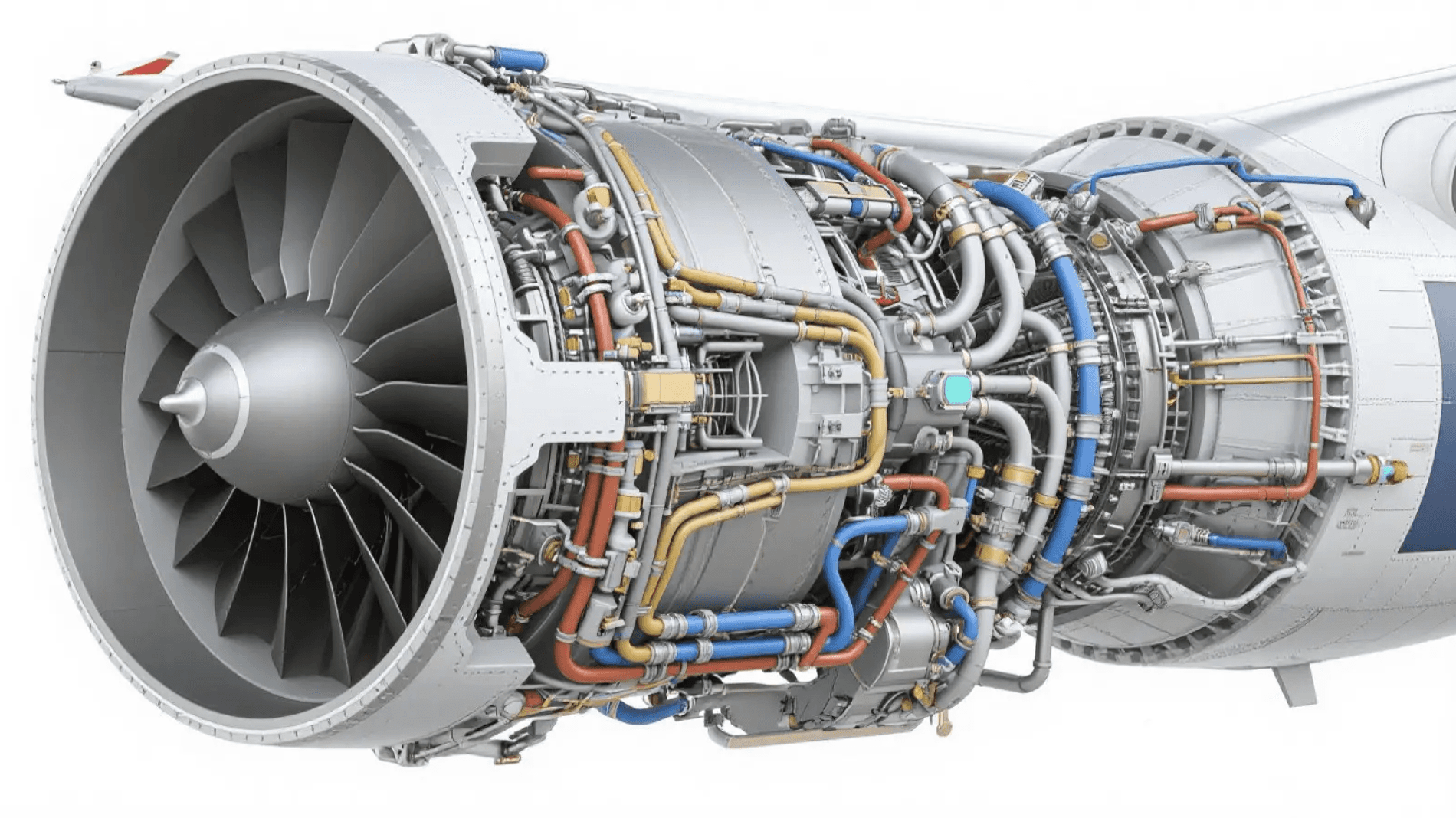
Aerospace & Defense
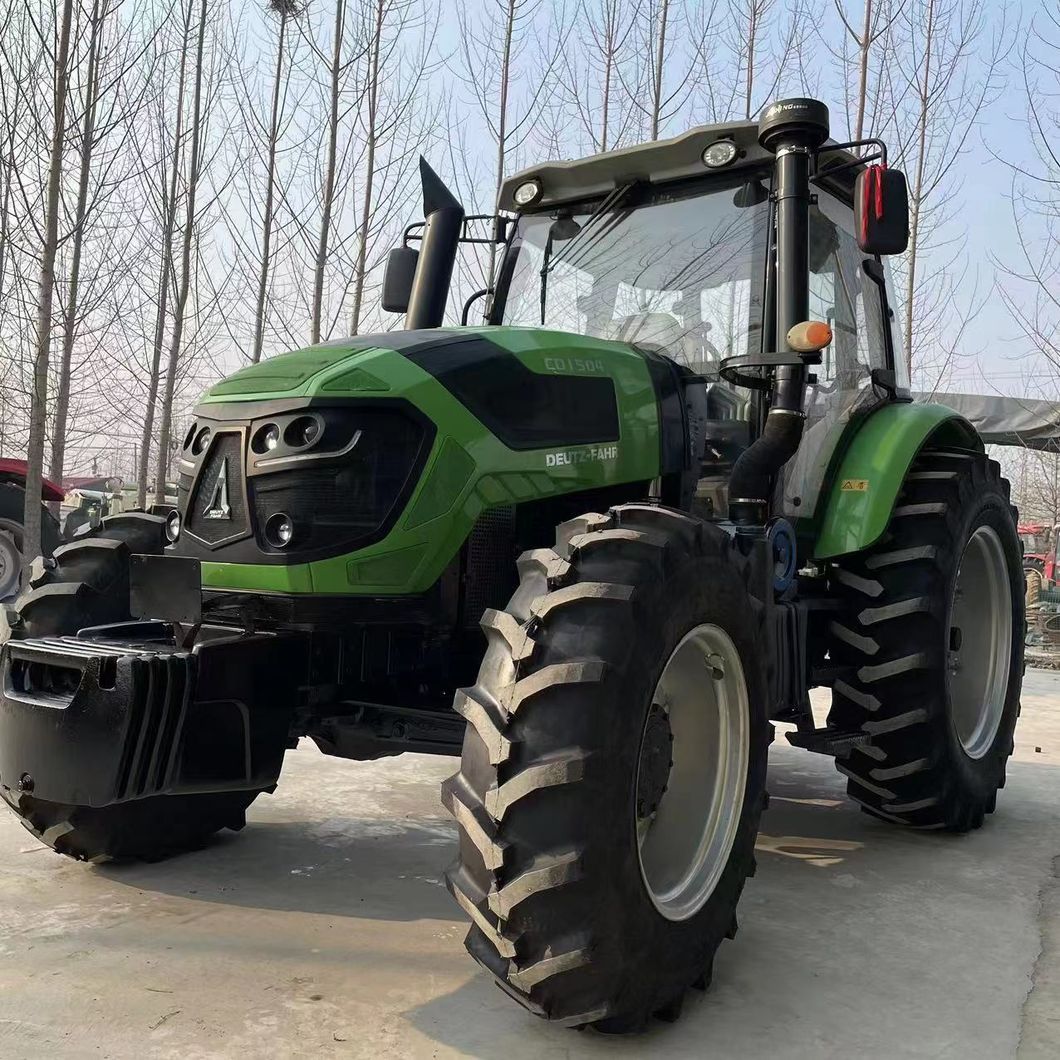
Agriculture

Automotive & EV

Consumer Electronics

Industrial Machinery

Medical Devices

Mining & Metallurgy

Robotics & Automation
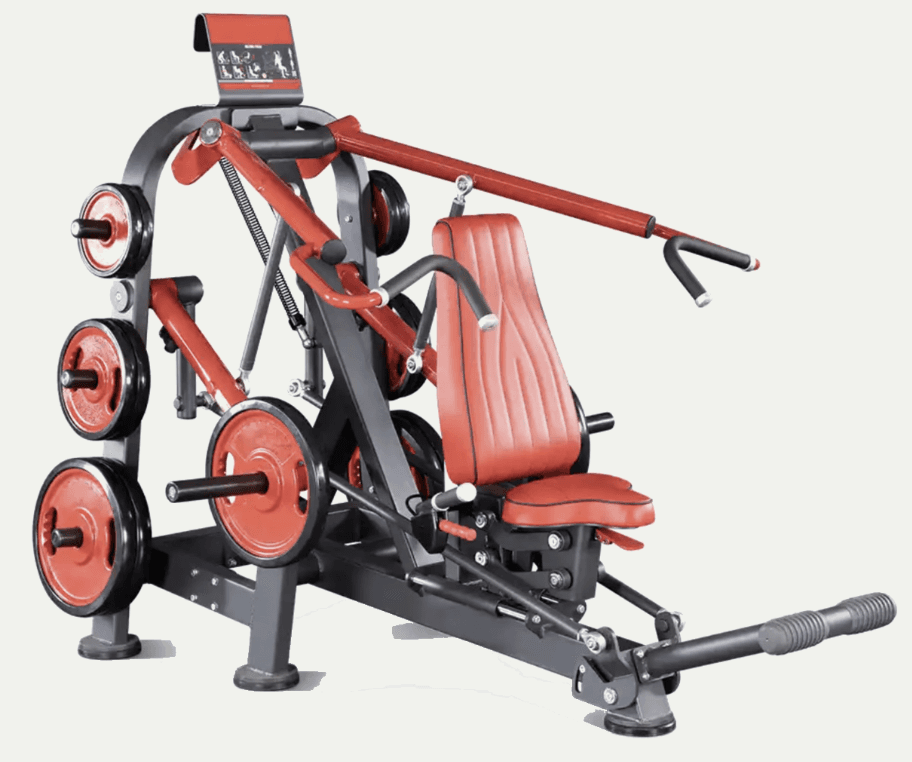
Sports & Recreation
Applications & Industries
Engineering Solutions Tailored for Critical Global Industries
Aerospace & Defense
Agriculture
Automotive & EV
Consumer Electronics
Industrial Machinery
Medical Devices
Mining & Metallurgy
Robotics & Automation
Applications & Industries
Engineering Solutions Tailored for Critical Global Industries
Aerospace & Defense
Agriculture
Automotive & EV
Consumer Electronics
Industrial Machinery
Medical Devices
Mining & Metallurgy
Robotics & Automation
Sports & Recreation
Why Choose Us for 3D Printing
We combine engineering expertise, China manufacturing access, and hands-on industry experience to help global companies develop and manufacture products with confidence.
🏆
15+ Years of Product Development & Engineering Experience
🎯
Experience with High-Precision, High-Complexity Products
⚙️
Expertise in Mechanical Design, DFM & Manufacturing
✅
On-Site Factory Visits, Production Follow-Up & Quality Control
📦
Prototype to Low-Volume & Production Manufacturing Support
👥
One Engineering Team for Sourcing, Manufacturing & Quality
🤝
Focused on Long-Term Partnerships, Not One-Time Orders




Engineering Expertise Manufacturing Access One Trusted Partner
Why Choose Us for 3D Printing
We combine engineering expertise, China manufacturing access, and hands-on industry experience to help global companies develop and manufacture products with confidence.
🏆
15+ Years of Product Development & Engineering Experience
🎯
Experience with High-Precision, High-Complexity Products
⚙️
Expertise in Mechanical Design, DFM & Manufacturing
✅
On-Site Factory Visits, Production Follow-Up & Quality Control
📦
Prototype to Low-Volume & Production Manufacturing Support
👥
One Engineering Team for Sourcing, Manufacturing & Quality
🤝
Focused on Long-Term Partnerships, Not One-Time Orders
Engineering Expertise Manufacturing Access One Trusted Partner
Why Choose Us for 3D Printing
We combine engineering expertise, China manufacturing access, and hands-on industry experience to help global companies develop and manufacture products with confidence.
🏆
15+ Years of Product Development & Engineering Experience
🎯
Experience with High-Precision, High-Complexity Products
⚙️
Expertise in Mechanical Design, DFM & Manufacturing
✅
On-Site Factory Visits, Production Follow-Up & Quality Control
📦
Prototype to Low-Volume & Production Manufacturing Support
👥
One Engineering Team for Sourcing, Manufacturing & Quality
🤝
Focused on Long-Term Partnerships, Not One-Time Orders
Engineering Expertise Manufacturing Access One Trusted Partner

QUALITY ASSURANCE
We process with quality in mind to ensure every CNC machined part is precise and reliable.
• Certified quality management systems
• Complete inspection capabilities (CMM, optical comparators, surface roughness testers, etc.)
• First-article, in-process, and final inspections
• Full traceability with detailed documentation
We ensure every part meets standards before delivery. This gives you confidence in your product.
QUALITY ASSURANCE
Strict quality check to ensure every CNC machined part is precise and reliable.
• Quality management systems.
• Complete inspection capabilities
(CMM, optical comparators, surface
roughness testers, etc.).
• First-article inspection, checks
during processing, and final check.
• Traceability and detailed reports.
We ensure every part meets standards before delivery. This gives you confidence in your product.
QUALITY ASSURANCE
We process with quality in mind to ensure every CNC machined part is precise and reliable.
• Quality management systems.
• Complete inspection capabilities (CMM, optical comparators,
surface roughness testers, etc.).
• First-article inspection, during process, and final inspection.
• Traceability and detailed reports.
We ensure every part meets standards before delivery. This gives you confidence in your product.
Our 3D Printing Process
Send us your 3D files and tell us about your project
We'll review your design & suggest the best technology and material.
We provide a transparent quote and a clear delivery date.
Your part is printed with continuous in-process monitoring.
We remove supports, clean, and apply any finishing you need.
Every part passes a thorough quality inspection.
Your order is carefully packed and shipped to arrive on time.
A dedicated project manager stays with you from start to finish, ensuring clear communication at every stage.

Common questions
Frequently Asked Questions
Find clear and concise answers to common questions about our process, services, and how we support business growth.
Which 3D printing technology is right for my project?
The best choice depends on your priorities—strength, detail, surface quality, or batch size. Our engineers evaluate your specific requirements and recommend the optimal process and material combination.
How long does printing typically take?
What dimensional accuracy can I expect?
Is there a minimum order quantity?
How can I request a quote?
Other Services (Capabilities)
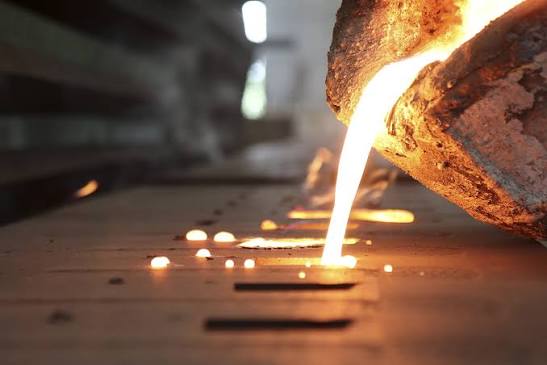
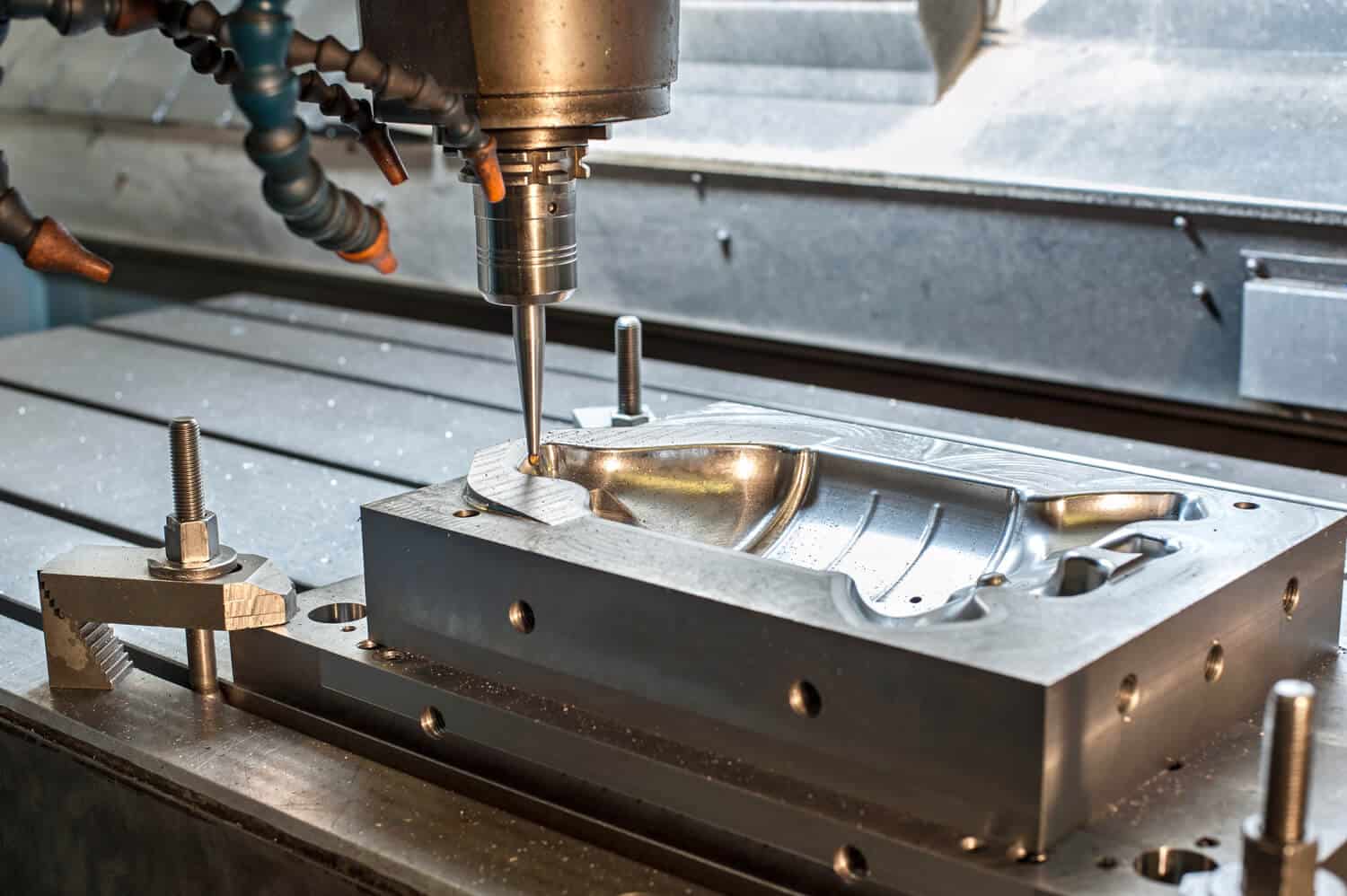
End-to-End Precision Manufacturing solutions




READY TO MOVE FORWARD
WITH YOUR DESIGN?
CONTACT US
READY TO MOVE FORWARD
WITH YOUR DESIGN?
CONTACT US
Common questions
Frequently Asked Questions
Find clear and concise answers to common questions about our process, services, and how we support business growth.
Which 3D printing technology is right for my project?
The best choice depends on your priorities—strength, detail, surface quality, or batch size. Our engineers evaluate your specific requirements and recommend the optimal process and material combination.