

Design Guide & Materials
Design Guide & Materials

Design Guide & Materials
General Design Principles
General Design Principles
For Efficient and Reliable Production
For Efficient and Reliable Production

Design for Manufacturing Principles
Design for Manufacturing Principles
10 Essential Principles
10 Essential Principles

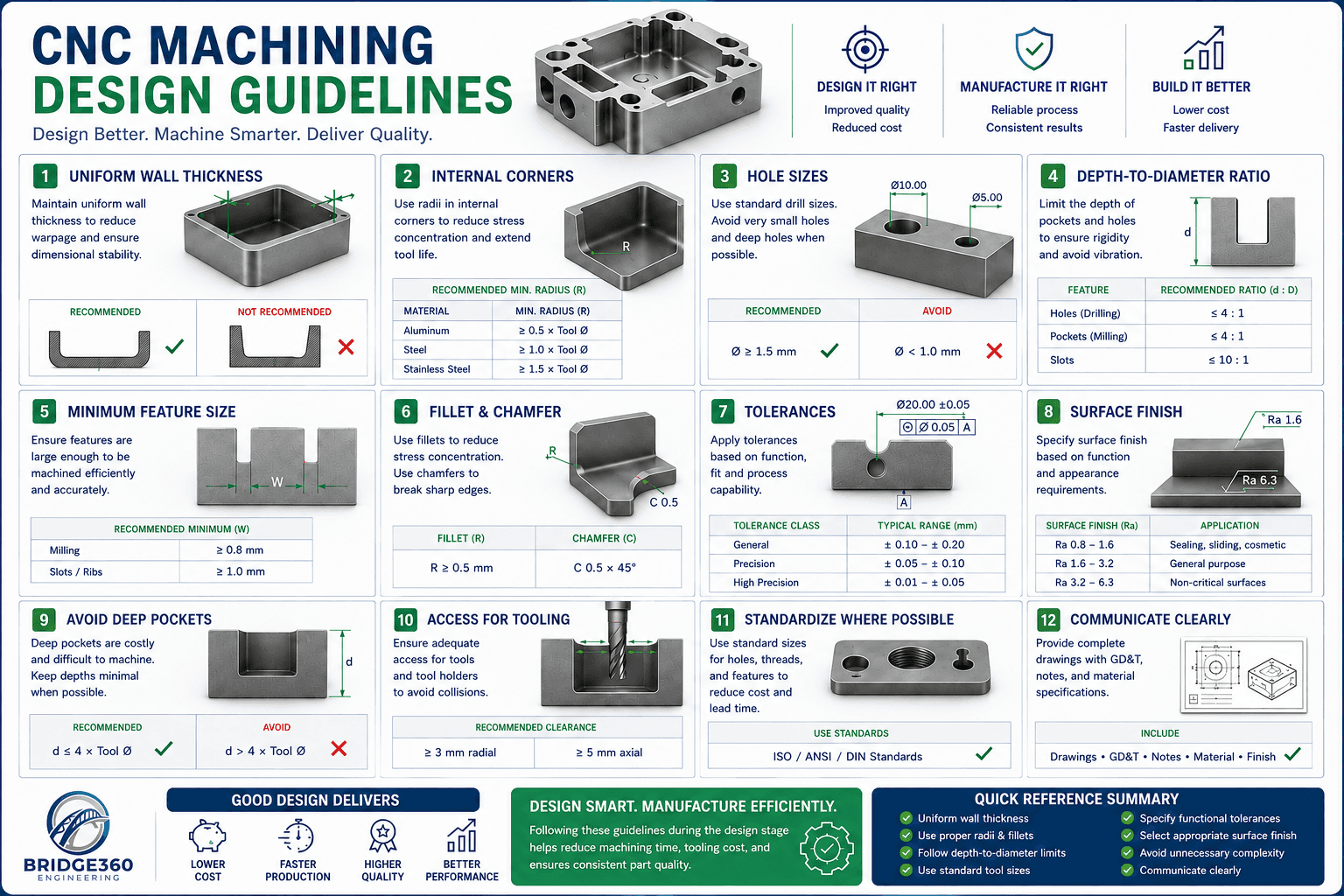
CNC Machining Design Guidelines
CNC Machining Design Guidelines
Design Better. Machine Smarter. Deliver Quality.
Design Better. Machine Smarter. Deliver Quality.
Sheet Metal Design Guidelines
Sheet Metal Design Guidelines
Design Smarter. Fabricate Better. Deliver Quality.
Design Smarter. Fabricate Better. Deliver Quality.

3D Printing Design Guidelines
3D Printing Design Guidelines
Design Smarter. Print Better. Deliver Quailty.
Design Smarter. Print Better. Deliver Quailty.

Injection Molding Design Guidelines
Injection Molding Design Guidelines
Design Smarter. Mold Better. Deliver Quality.
Design Smarter. Mold Better. Deliver Quality.

Compression Molding Design Principles
Compression Molding Principles
Strong Parts. Reliable Process. Better Results.
Strong Parts. Reliable Process. Better Results.

Common Design Mistakes to Avoid
Common Design Mistakes to Avoid
Avoid Mistakes. Save Time. Reduce Cost.
Avoid Mistakes. Save Time. Reduce Cost.

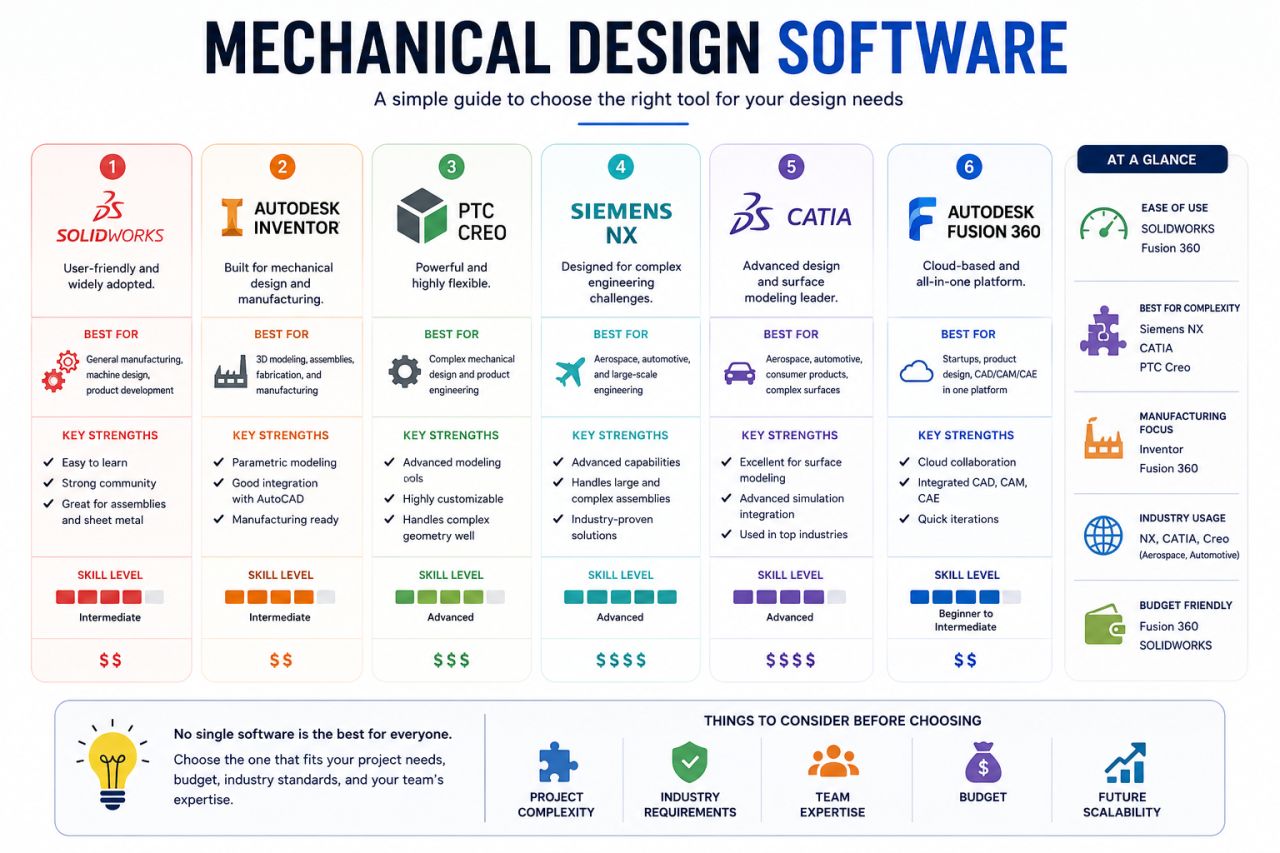
Mechanical Design Software Guide
Design Software Guide
A simple guide to choose the right tool for your design needs
Guide to choose right tool for your design needs
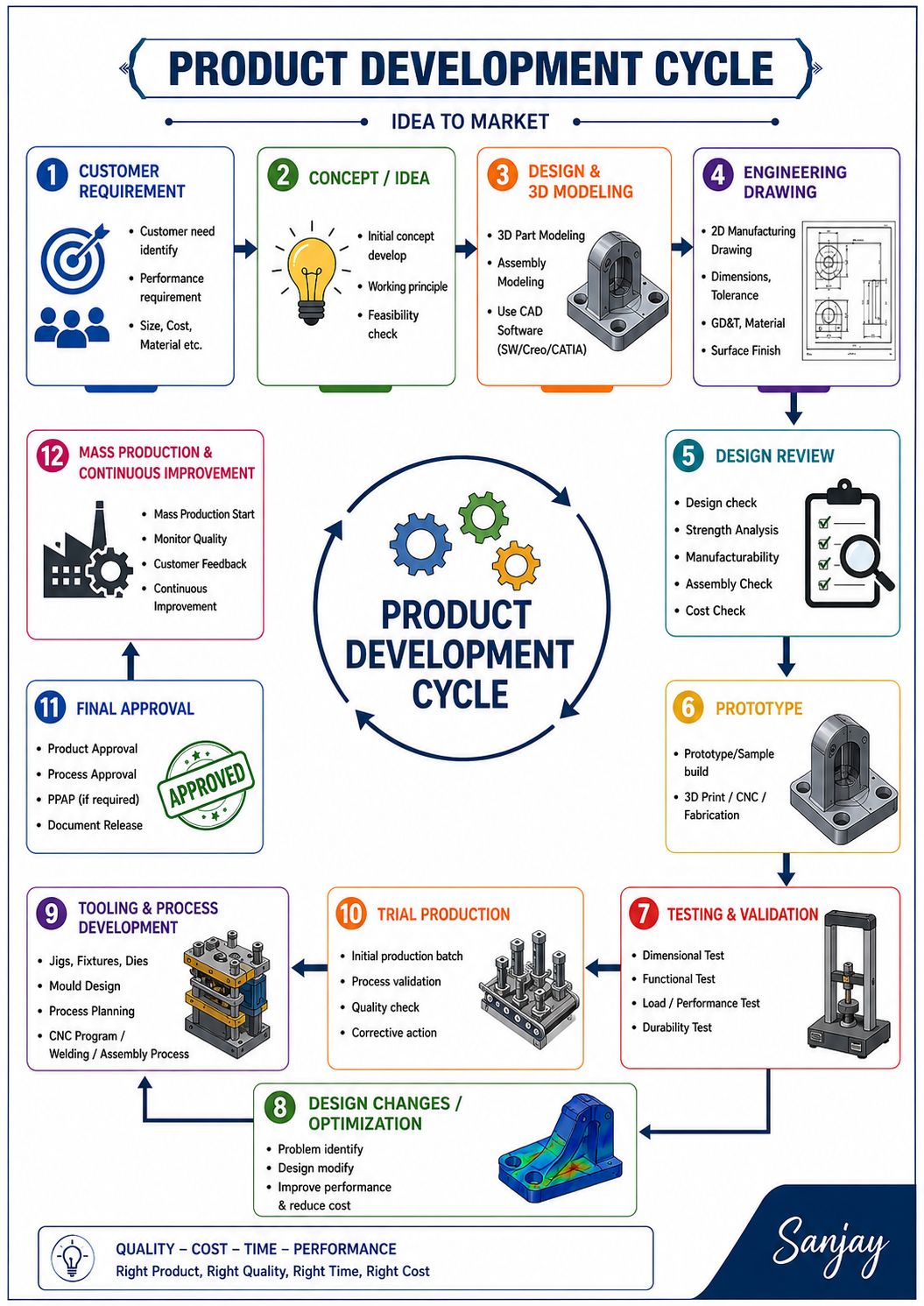
Product Development Cycle
Idea To Market
Product Development Cycle
Idea to Market


How We Support Your Design
Engineering Support
1
Design Review
Design Review
Our engineering team conducts a thorough review of your design, examining material selection, part geometry, production volume, and performance requirements to determine the most suitable manufacturing approach.
Our engineering team conducts a thorough review of your design, examining material selection, part geometry, production volume, and performance requirements to determine the most suitable manufacturing approach.
2
Recommendations
Recommendations
We then provide clear, actionable recommendations that improve manufacturability while carefully balancing quality, cost, performance, and lead time. Our guidance is always grounded in real production realities, not abstract theory.
We then provide clear, actionable recommendations that improve manufacturability while carefully balancing quality, cost, performance, and lead time. Our guidance is always grounded in real production realities, not abstract theory.
3
Collaborative Support
Collaborative Support
Throughout the process, we emphasize indepth communication and active collaboration. We work side by side with you to solve challenges as they arise, ensuring your final design is not only efficient and reliable but also fully ready for smooth production execution
Throughout the process, we emphasize indepth communication and active collaboration. We work side by side with you to solve challenges as they arise, ensuring your final design is not only efficient and reliable but also fully ready for smooth production execution
How We Support Your Design
Engineering Support
1
Design Review
Our engineering team conducts a thorough review of your design, examining material selection, part geometry, production volume, and performance requirements to determine the most suitable manufacturing approach.
2
Recommendations
We then provide clear, actionable recommendations that improve manufacturability while carefully balancing quality, cost, performance, and lead time. Our guidance is always grounded in real production realities, not abstract theory.
3
Collaborative Support
Throughout the process, we emphasize indepth communication and active collaboration. We work side by side with you to solve challenges as they arise, ensuring your final design is not only efficient and reliable but also fully ready for smooth production execution
Material Library
CNC Machining Materials
Metals
Material
Aluminum 6061
Aluminum 7075
Stainless Steel 304
Stainless Steel 316
Mild Steel
Brass
Copper
Titanium
Properties
Lightweight, good strength, excellent machinability
High strength, good fatigue resistance
Corrosion resistant, durable
Superior corrosion resistance
Strong and cost-effective
Good machinability, corrosion resistance
Excellent thermal and electrical conductivity
High strength-to-weight ratio, corrosion resistant
Applications
Enclosures, brackets, structural components
Aerospace and high-stress parts
Medical, food-grade, structural parts
Marine, medical, chemical environments
General structural and industrial parts
Fittings, decorative and electrical parts
Heat sinks, electrical components
Aerospace, medical, high-performance parts
Metals
Aluminum
Copper
Bronze
Steel
Stainless Steel
Magnesium
Titanium

Plastics
Material
ABS
PC (Polycarbonate)
POM (Delrin)
Nylon (PA)
PEEK
PTFE
Properties
Tough, impact resistant, easy to machine
High impact strength, optional transparency
Low friction, high dimensional stability
Strong, wear resistant
High temperature and chemical resistance
Very low friction, excellent chemical resistance
Applications
Enclosures, prototypes, consumer parts
Covers, guards, optical components
Gears, bushings, precision components
Mechanical and structural parts
High-performance and demanding applications
Seals, insulators, low-friction parts
Plastics
ABS
Polycarbonate (PC)
POM (Delrin)
PEEK
PA (Nylon)
PMMA (Acrylic)
PTFE (Teflon)

Sheet Metal Materials
Fabrication materials (Metals)
Material
Aluminum
Stainless Steel
Mild Steel
Galvanized Steel
Copper
Brass
Properties
Lightweight, corrosion resistant
High strength, excellent corrosion resistance
Strong and economical
Corrosion-resistant coating
High electrical and thermal conductivity
Corrosion resistant with aesthetic appeal
Applications
Enclosures, panels, brackets
Cabinets, medical and industrial equipment
Frames, brackets, structural parts
Outdoor and industrial enclosures
Electrical and thermal components
Decorative and functional parts
Materials for Sheet Metal Fqabrication
Bridge360 Engineering processes a wide spectrum of sheet metal alloys optimized for mechanical strength, formability, corrosion resistance, and thermal/electrical conductivity. Our technical team collaborates directly with your team to select the ideal material grade and temper based on your functional, environmental, and budgetary demands.
Aluminum
5052, 5083, 6061-T6
Lightweight, superior strength-to-weight ratio, excellent corrosion resistance; ideal for aerospace, automotive, and electronic enclosures.
Stainless Steel
304, 316 / 316L, 430
Superior oxidation and chemical resistance, high tensile strength; essential for medical, food-grade, marine, and harsh environments.
Carbon & Mild Steel
Cold-Rolled (SPCC), Hot-Rolled (A36, Q235)
High structural strength and exceptional cost-effectiveness; optimal for structural brackets, chassis, and heavy equipment frames.
Galvanized Steel
SGCC, Hot-Dip Galvanized
Pre-coated with a protective zinc layer for enhanced rust and corrosion resistance without requiring immediate secondary plating.
Copper & Brass
C1100 (Copper), C2600 (Brass)
Exceptional thermal and electrical conductivity, low friction, and high malleability; ideal for busbars, electrical contacts, and EMI shielding.
Surface Finishing: Powder Coating, Anodizing (Type II & III Hardcoat), Electroplating (Zinc, Nickel), Passivation, Chromate Conversion, Bead Blasting, and Custom Silk-Screening.

Molding Materials
Plastics
Material
ABS
PC
PP
PA (Nylon)
POM
PEEK
Properties
Good impact resistance, easy to mold
High strength and heat resistance
Chemical resistant, lightweight
Strong and wear resistant
Low friction, high stiffness
High performance under heat and stress
Applications
Housings, consumer product covers
Transparent parts, protective covers
Containers, living hinges, consumer parts
Mechanical components and gears
Precision mechanical parts
Demanding engineering applications
3D Printing Materials
Additive Manufacturing Technologies
Material
SLS / MJF
FDM
SLM (Metal)
SLA
Properties
Standard, tough, and high-detail resins
Nylon (PA12), glass-filled nylon, TPU
ABS, PLA, PETG, PC, Nylon, PEEK
Aluminum, Stainless Steel, Titanium
Applications
Visual prototypes and detailed models
Functional prototypes and end-use parts
Concept models and functional components
Complex metal prototypes and production parts
READY TO MOVE FORWARD
WITH YOUR DESIGN?
CONTACT US
Material Library
CNC Machining Materials
Metals
Aluminum 6061
Properties: Lightweight, good strength, excellent machinability
Applications: Enclosures, brackets, structural components
Aluminum 7075
Properties: High strength, good fatigue resistance
Applications: Aerospace and high-stress parts
Stainless Steel 304
Properties: Corrosion resistant, durable
Applications: Medical, food-grade, structural parts
Stainless Steel 316
Properties: Superior corrosion resistance
Applications: Marine, medical, chemical environments
Mild Steel
Properties: Strong and cost-effective
Applications: General structure and industrial parts
Brass
Properties: Good machinability, corrosion resistance
Applications: Fittings, decorative and electrical parts
Copper
Properties: Excellent thermal and electrical conductivity
Applications: Heat sinks, electrical components
Titanium
Properties: High strength-to-weight ratio, corrosion resistant
Applications: Aerospace, medical, high-performance parts
Plastics
ABS
Properties: Tough, impact resistant, easy to machine
Applications: Enclosures, prototypes, consumer parts
PC (Polycarbonate)
Properties: High impact strength, optional transparency
Applications: Covers, guards, optical components
POM (Delrin)
Properties: Low friction, high dimentional stability
Applications: Gears, brushings, precision components
PA (Nylon)
Properties: Strong, wear resistant
Applications: Mechanical and Structural Parts
PEEK
Properties: High temperature and chemical resistance
Applications: high-performance, and demanding applications
PTFE
Properties: Very low friction, excellent chemical resistance
Applications: Seals, insulators, low-friction parts
Sheet Metal Materials
Fabrication materials (Metals)
Aluminum
Properties: Lightweight, corrosion resistant
Applications: Enclosures, panels, brackets
Stainless Steel
Properties: High strength, excellent corrosion resistance
Applications: Cabinets, medical and industrial equipment
Mild Steel
Properties: Strong and economical
Applications: Frames, brackets, structural parts
Galvanized Steel
Properties: Corrosion-resistant coating
Applications: Outdoor and industrial enclosures
Copper
Properties: High electrical and thermal conductivity
Applications: Electrical and thermal components
Brass
Properties: Corrosion resistant with aesthetic appeal
Applications: Decorative and functional parts
Molding Materials
Plastics
ABS
Properties: Good impact resistance, easy to mold
Applications: Housings, consumer product covers
PC
Properties: High strength and heat resistance
Applications: Transparent parts, protective covers
PP
Properties: Chemical resistant, lightweight
Applications: Containers, living hinges, consumer parts
PA (Nylon)
Properties: Strong and wear resistant
Applications: Mechanical components and gears
POM
Properties: Low friction, high stiffness
Applications: Precision mechanical parts
PEEK
Properties: High performance under heat and stress
Applications: Demanding engineering applications
3D Printing Materials
Additive Manufacturing Technologies
Materials for Sheet Metal Fqabrication
Bridge360 Engineering processes a wide spectrum of sheet metal alloys optimized for mechanical strength, formability, corrosion resistance, and thermal/electrical conductivity. Our technical team collaborates directly with your team to select the ideal material grade and temper based on your functional, environmental, and budgetary demands.
Aluminum
5052, 5083, 6061-T6
Lightweight, superior strength-to-weight ratio, excellent corrosion resistance; ideal for aerospace, automotive, and electronic enclosures.
Stainless Steel
304, 316 / 316L, 430
Superior oxidation and chemical resistance, high tensile strength; essential for medical, food-grade, marine, and harsh environments.
Carbon & Mild Steel
Cold-Rolled (SPCC), Hot-Rolled (A36, Q235)
High structural strength and exceptional cost-effectiveness; optimal for structural brackets, chassis, and heavy equipment frames.
Galvanized Steel
SGCC, Hot-Dip Galvanized
Pre-coated with a protective zinc layer for enhanced rust and corrosion resistance without requiring immediate secondary plating.
Copper & Brass
C1100 (Copper), C2600 (Brass)
Exceptional thermal and electrical conductivity, low friction, and high malleability; ideal for busbars, electrical contacts, and EMI shielding.
Surface Finishing: Powder Coating, Anodizing (Type II & III Hardcoat), Electroplating (Zinc, Nickel), Passivation, Chromate Conversion, Bead Blasting, and Custom Silk-Screening.
SLA
Properties: Standard, tough, and high-detail resins
Applications: Visual prototypes and detailed models
SLS / MJF
Properties: Nylon (PA12), glass-filled nylon, TPU
Applications: Functional prototypes and end-use parts
FDM
Properties: ABS, PLA, PETG, PC, Nylon, PEEK
Applications: Concept models and functional components
SLM (Metals)
Properties: Aluminum, Stainless Steel, Titanium
Applications: Complex metal prototypes and production parts
Common questions
Frequently Asked Questions
Find clear and concise answers to common questions about our process, services, and how we support business growth.
Do I need to follow every guideline strictly?
These are recommended best practices. Some deviations are acceptable depending on functional requirements. Our team can help evaluate trade-offs.
Can you review my design before manufacturing?
What if my design is already finalized?
How do I get design feedback?
READY TO MOVE FORWARD
WITH YOUR DESIGN?
CONTACT US
Common questions
Frequently Asked Questions
Find clear and concise answers to common questions about our process, services, and how we support business growth.
Do I need to follow every guideline strictly?
These are recommended best practices. Some deviations are acceptable depending on functional requirements. Our team can help evaluate trade-offs.
Can you review my design before manufacturing?
What if my design is already finalized?
How do I get design feedback?

Design Guide & Material