
Surface Finishing

At Bridge360 Engineering, we deliver production-grade surface finishes directly from the mold alongside advanced post-processing treatments. Our capabilities include SPI mirror polishing up to SPI-A1, VDI and Mold-Tech texturing, anodizing, electroplating, and protective coatings to ensure your plastic, rubber, and metal components meet exact visual and functional standards.

Surface Finishing

At Bridge360 Engineering, we deliver production-grade surface finishes directly from the mold alongside advanced post-processing treatments. Our capabilities include SPI mirror polishing up to SPI-A1, VDI and Mold-Tech texturing, anodizing, electroplating, and protective coatings to ensure your plastic, rubber, and metal components meet exact visual and functional standards.

AS MACHINED

ELECTROPLATING

SAND BLASTING

PAINTING

BRUSHED FINISH

POWDER COATING

POLISHING

DEBURRING

ANODIZING

  • Overview: Standard baseline finish with a uniform 3.2µm (126µin) surface roughness. Cleanly eliminates burrs and sharp edges left from milling or turning.

  • Best For: Functional parts with no extra decorative coating requirements.

  • Processes: CNC machining, Sheet metal fabrication

  • Materials: Metals, Plastics

Metallic Parts Surface Finish & Post Processing

Metallic Parts Surface Finish & Post Processing

AS MACHINED

ELECTROPLATING

SAND BLASTING

PAINTING

BRUSHED FINISH

POWDER COATING

POLISHING

DEBURRING

ANODIZING

  • Overview: Standard baseline finish with a uniform 3.2µm (126µin) surface roughness. Cleanly eliminates burrs and sharp edges left from milling or turning.

  • Best For: Functional parts with no extra decorative coating requirements.

  • Processes: CNC machining, Sheet metal fabrication

  • Materials: Metals, Plastics

Metallic Parts Surface Finish & Post Processing

AS MACHINED

ELECTROPLATING

SAND BLASTING

PAINTING

BRUSHED FINISH

POWDER COATING

POLISHING

DEBURRING

ANODIZING

  • Overview: Standard baseline finish with a uniform 3.2µm (126µin) surface roughness. Cleanly eliminates burrs and sharp edges left from milling or turning.

  • Best For: Functional parts with no extra decorative coating requirements.

  • Processes: CNC machining, Sheet metal fabrication

  • Materials: Metals, Plastics

Rubber & Plastic Surface Finishing Standard
At Bridge360 Engineering, we ensure every custom molded component achieves the exact finish required for your aesthetic and functional needs. By strictly adhering to international SPI and VDI standards, we deliver precise surface textures directly from the mold with consistent quality across every production run.

Bridge360 Engineering delivers custom molded components with precise, SPI- and VDI-compliant surface finishes—consistent quality in every production run.

spi surface finishes

SPI Finishing Standard

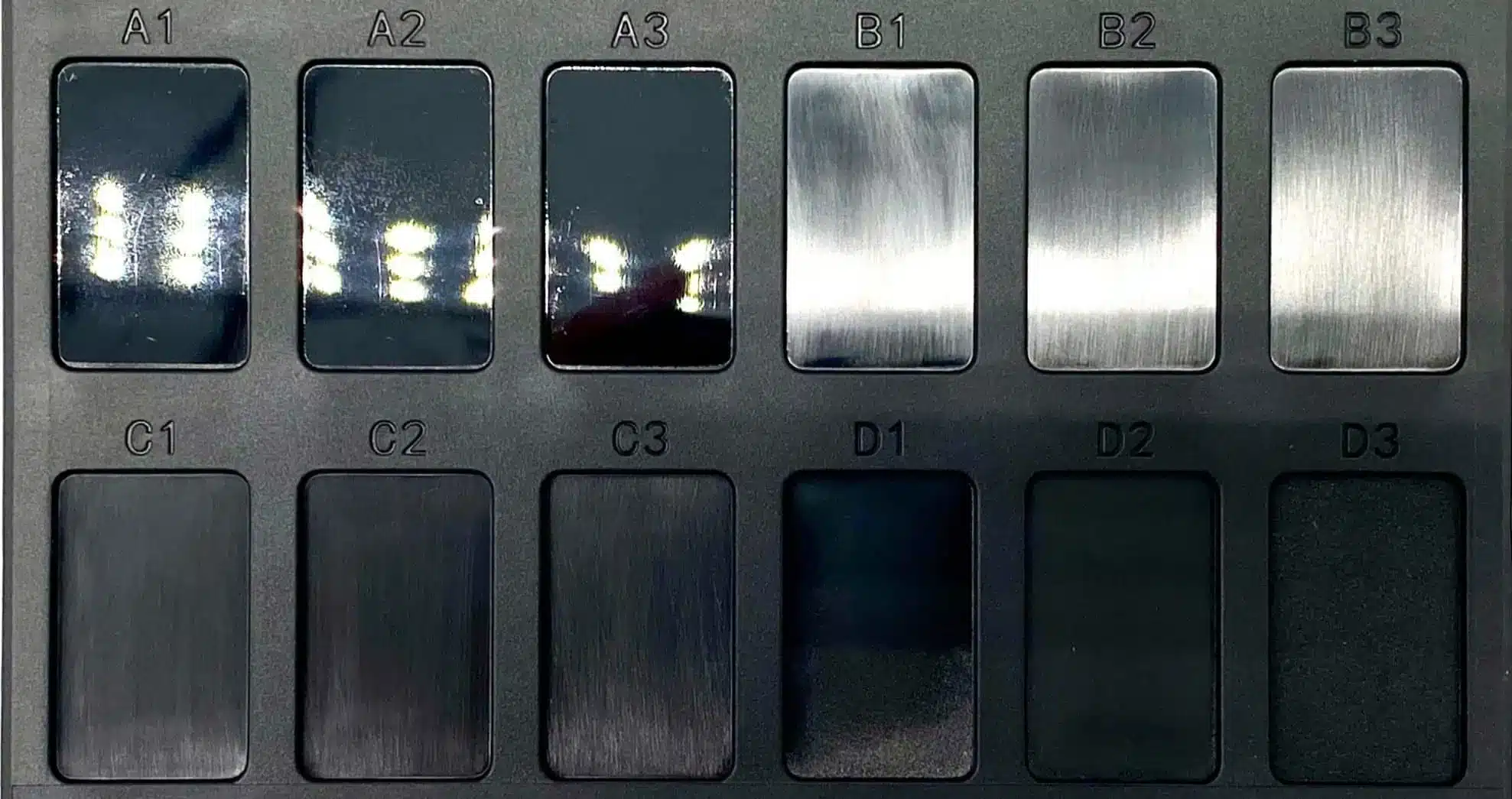
The SPI surface finishing standards, established by the Society of the Plastics Industry, categorize finishes into twelve grades ranging from A1 to D3, with surface roughness values from RA 0.012 μm to RA 18.00 μm, covering a spectrum from shiny to dull and from polished to textured finishes. Each grade specifies different finishing methods and recommended materials, ensuring consistency and quality in molded plastic parts.

SPI Surface Finish Grades Overview

vdi surface finishing

The VDI surface finishing standard, specifically VDI 3400, categorizes surface roughness for injection mold tooling into a scale ranging from VDI 0 (the smoothest) to VDI 45 (the roughest), where lower numbers indicate smoother finishes suitable for high-gloss applications, and higher numbers represent rougher finishes often used for industrial parts.

vdi surface finishing

VDI Finishing Standard

The VDI surface finishing standard, specifically VDI 3400, categorizes surface roughness for injection mold tooling into a scale ranging from VDI 0 (the smoothest) to VDI 45 (the roughest), where lower numbers indicate smoother finishes suitable for high-gloss applications, and higher numbers represent rougher finishes often used for industrial parts.

VDI Surface Finish Grades Overview

Grade

VDI 0 - 15

VDI 16 - 30

VDI 31 - 45

Roughness (μm)

< 0.1 to 0.5 μm

0.5 to 3.2 μm

> 3.2 μm

Appearance

Very Smooth Finishes

Medium Roughness Finishes

Rough Finishes

Description

Typically used for optical components or high-gloss surfaces.

Suitable for most consumer products, providing a balance between aesthetics and functionality.

Often used for industrial parts where appearance is less critical; these finishes may provide better grip or texture.

Grade

VDI 0 - 15

VDI 16 - 30

VDI 31 - 45

Roughness (μm)

< 0.1 to 0.5 μm

0.5 to 3.2 μm

> 3.2 μm

Appearance

Very Smooth Finishes

Medium Roughness Finishes

Rough Finishes

Description

Typically used for optical components or high-gloss surfaces.

Suitable for most consumer products, providing a balance between aesthetics and functionality.

Often used for industrial parts where appearance is less critical; these finishes may provide better grip or texture.

Examples of Common Surface Finishing

Examples of Common Surface Finishing

glossy surface

Glossy Surface

Achieved through high polishing techniques, resulting in a mirror-like surface

Price range: $$$

Applications: High-end consumer products, optical components.

semi-gloss surface

Semi-Gloss Finish

Provides a moderate level of gloss, balancing shine and aesthetic appeal.

Price range: $

Applications: Automotive interiors, electronic housings.

matte surface

Matte Finish

Non-reflective surface that minimizes glare; often achieved through specific texturing techniques.

Price range: $$

Applications: Subdued appearance, consumer goods

texture surface

Textured Finish

Description: Rougher surface textures created through methods like sandblasting or texturing.

Price range: $$$

Application: High-end consumer products, optical components.

Upload Drawing for Quote

Upload Drawing for Quote

Enhance your custom molding parts with expert surface finishing!

Enhance your parts with surface finishing!

Other Services (Capabilities)

End-to-End Precision Manufacturing solutions

Common questions

Surface Finishing FAQs

Find clear and concise answers to common questions about our process, services, and how we support business growth.

Can I request a custom surface texture for my parts?

Yes, we can create custom textures based on your design and functional needs.

What is the difference between SPI and VDI surface standards?

Do surface finishes affect part performance?

Can I combine multiple surface finishes on a single part?

Do surface finishes affect the cost of molding?

How do you handle maintenance for molds with intricate finishes?

Can you modify an existing mold to add a new surface texture?

Other Services (Capabilities)

End-to-End Precision Manufacturing solutions

Other Services (Capabilities)

End-to-End Precision Manufacturing solutions