


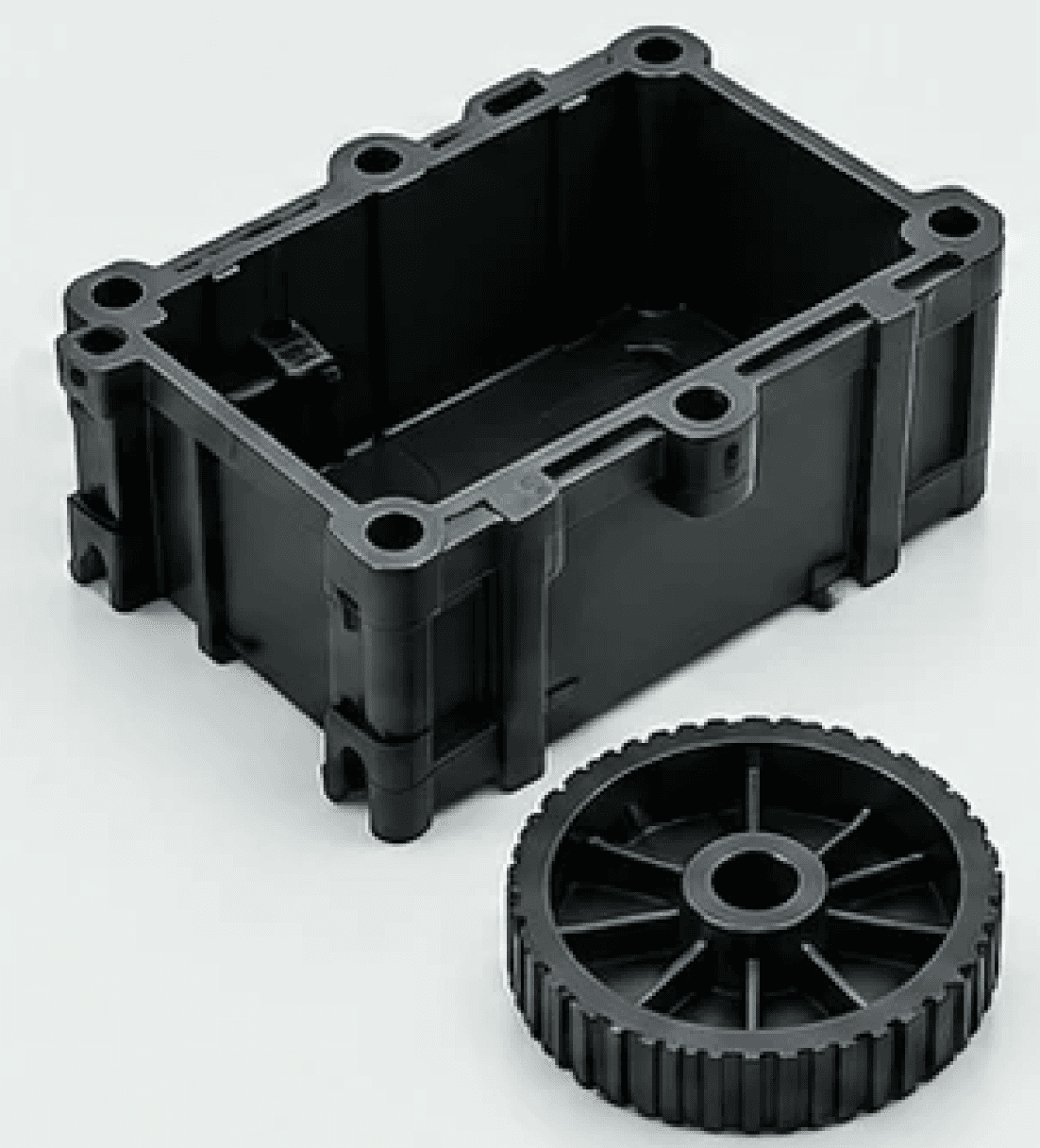
We Offer Plastic Compression Molding Service Specific to Your Needs!
Plastic Compression Molding Service
Plastic compression molding transforms preheated thermoset or high-performance thermoplastic materials into precise, durable, and high-strength components. By applying controlled heat and elevated pressure within a heated mold, this process is uniquely suited for manufacturing large, thick-walled, or high-wear industrial parts that demand exceptional dimensional stability.
As your central engineering and manufacturing partner, Bridge360 Engineering oversees every phase of your project. We bridge the gap between initial design and final delivery—managing material selection, tooling, and strict quality control to deliver turnkey components built to specification.
✅ Engineered for large, thick-wall geometries that are difficult to mold via standard injection processes.
✅ Mold design and tooling management keep upfront investment competitive and timelines fast.
✅ Reliable, repeatability tailored for both low-volume prototype runs and continuous production.
✅ Delivers uniform part density, low internal stress, and superior surface finishes.
Plastic Compression Molding Process
Our step-by-step plastic compression molding process transforms raw material into precise, high-performance components using controlled heat and hydraulic pressure.
Step 1: Material Preparation
High-performance molding compounds (preforms, granules, or sheets) are precisely weighed and preheated to ensure optimal flow and cross-linking consistency.
Step 2: Mold Loading & Insert Positioning
The preconditioned material is loaded directly into the open, heated mold cavity. Any required metal inserts, cores, or reinforcement structures are secured at this stage.
Step 3: Compression & Thermal Curing
Hydraulic presses close the mold under continuous heat and high pressure. The plastic flows evenly to fill all cavity details and cures until fully dimensionally stable.
Step 4: Demolding, Finishing & Final Audit
The mold opens, and the solidified component is extracted. The part undergoes post-mold cooling, precision flash removal, and thorough dimensional inspection before final release.
Compatible Engineering Plastics
Not all polymers are suited for compression methods. We specialize in processing ultra-high-performance materials that excel under high compression:
PTFE (Teflon): Exceptional chemical inertness, extreme temperature stability, and an extremely low coefficient of friction.
UHMWPE: Outstanding abrasion and impact resistance with self-lubricating properties for high-wear mechanical environments.
Custom Composites: Specialized thermosets, reinforced blends, and filled fluoropolymers evaluated and processed upon request.
Typical Applications & Components
Our plastic compression molding capabilities serve demanding fluid handling, electrical, and heavy machinery applications:
Sealing Rings & Gaskets:
High-integrity seals built for corrosive chemical or high-pressure environments.
Valve Seats & Diaphragms:
Low-friction, wear-resistant elements for precision fluid and gas control.Bearing Bushings & Sleeves:
Self-lubricating sleeve bearings designed to reduce wear without external lubricants.Wear Plates & Guide Rails:
High-impact, low-friction sliding surfaces for material handling systems.Electrical Insulating Washers & Spacers:
High-dielectric components designed for high-voltage isolation.Pump & Compressor Components:
Durable internal parts built to withstand continuous mechanical stress.
Key Advantages
✅ Superior Density & Strength: High, uniform pressure produces dense, void-free parts with minimal internal stresses.
✅ Low Material Waste: Direct-cavity loading eliminates sprues and runners, making high-cost fluoropolymers more economical to process.
✅ Thick-Section Molding: Capable of producing dense, heavy cross-sections without sink marks or structural voids.
Process Considerations
❌ Extended Cycle Times: Thermal curing and cooling under press pressure require longer cycle times than high-speed injection molding.
❌ Material-Specific Application: Best suited for high-performance thermosets and specialized thermoplastics like PTFE and UHMWPE rather than commodity resins.
Common questions
Frequently Asked Questions
Find clear and concise answers to common questions about our process, services, and how we support business growth.
When choose compression molding instead of injection molding?
Compression molding is preferred when materials cannot be melted and injected, such as PTFE or UHMWPE. It also works well for thick, solid parts with consistent density and strength, whereas injection molding is better for high-volume and complex thin-wall parts.